How TMS works
Plain-English guide to TMS: what it is, what a session is like, and how a course of treatment works, without medication or downtime.
The short version
What TMS is, in brief
TMS is a non-invasive treatment for depression, anxiety, PTSD, OCD, ADHD, and more. A small coil rests against your head and sends focused magnetic pulses to the part of the brain that helps regulate the condition you are being treated for; the location varies by treatment protocol.
You stay awake the whole time. There is no anesthetic, no sedation, and nothing enters your bloodstream, so it does not carry the systemic side effects that come with antidepressants. A course is a series of short daily sessions.
TMS reflects a shift in how mental illness is understood. As precision psychiatry maps the brain’s circuitry more closely, treatment protocols evolve with it. The technology builds on Michael Faraday’s work on electromagnetic induction in the early 1800s: the magnetic pulses induce small electrical changes in nerve cells, strengthening the neural pathways tied to the condition being treated and supporting the brain’s capacity to adapt and reorganize, its neuroplasticity, across the lifespan.

THE PULSE PATH
From the coil to the target area
A coil rests on your scalp and sends brief magnetic pulses painlessly through the skull. Nothing is implanted or inserted.
In the brain
What the pulses actually change
Depending on the condition, the pulses either increase or decrease activity in a targeted area of the brain.
In depression, an area near the front of the brain that helps regulate mood tends to be underactive. Repeated day after day, the pulses help bring that activity back toward a healthy level, and for people who respond, the change tends to hold after treatment ends.
A session
What it's like to sit in the chair
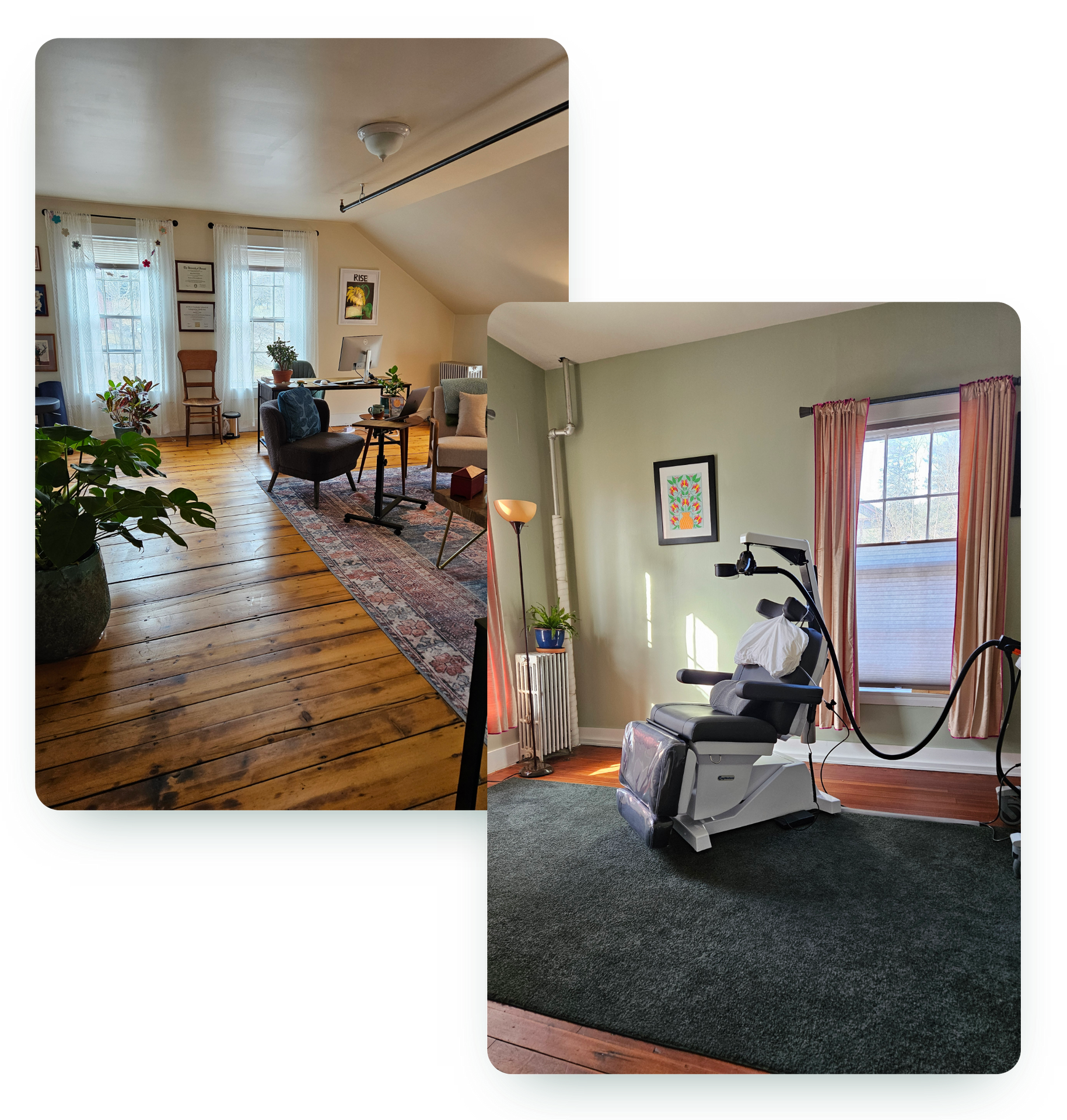
You sit in a treatment chair, awake and comfortable. The coil is positioned against your head, and treatment begins.
Your clinicians
You're in expert hands
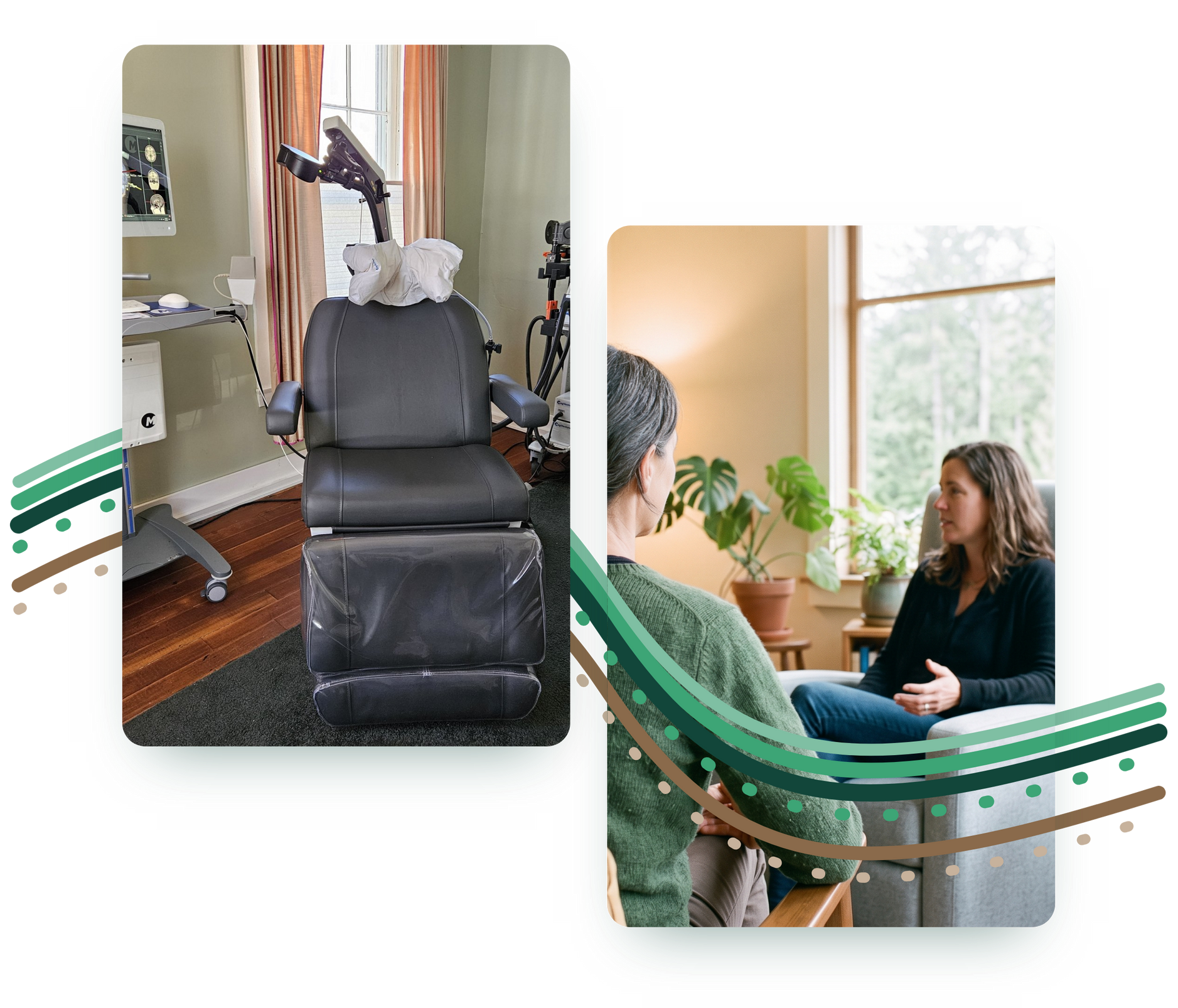
State Street TMS offers a comprehensive approach to your health and wellness. As an independent, clinician-owned, and community-based practice, we set ourselves apart by moving beyond standard treatment to deliver highly customized, personalized care in a welcoming, comfortable environment.
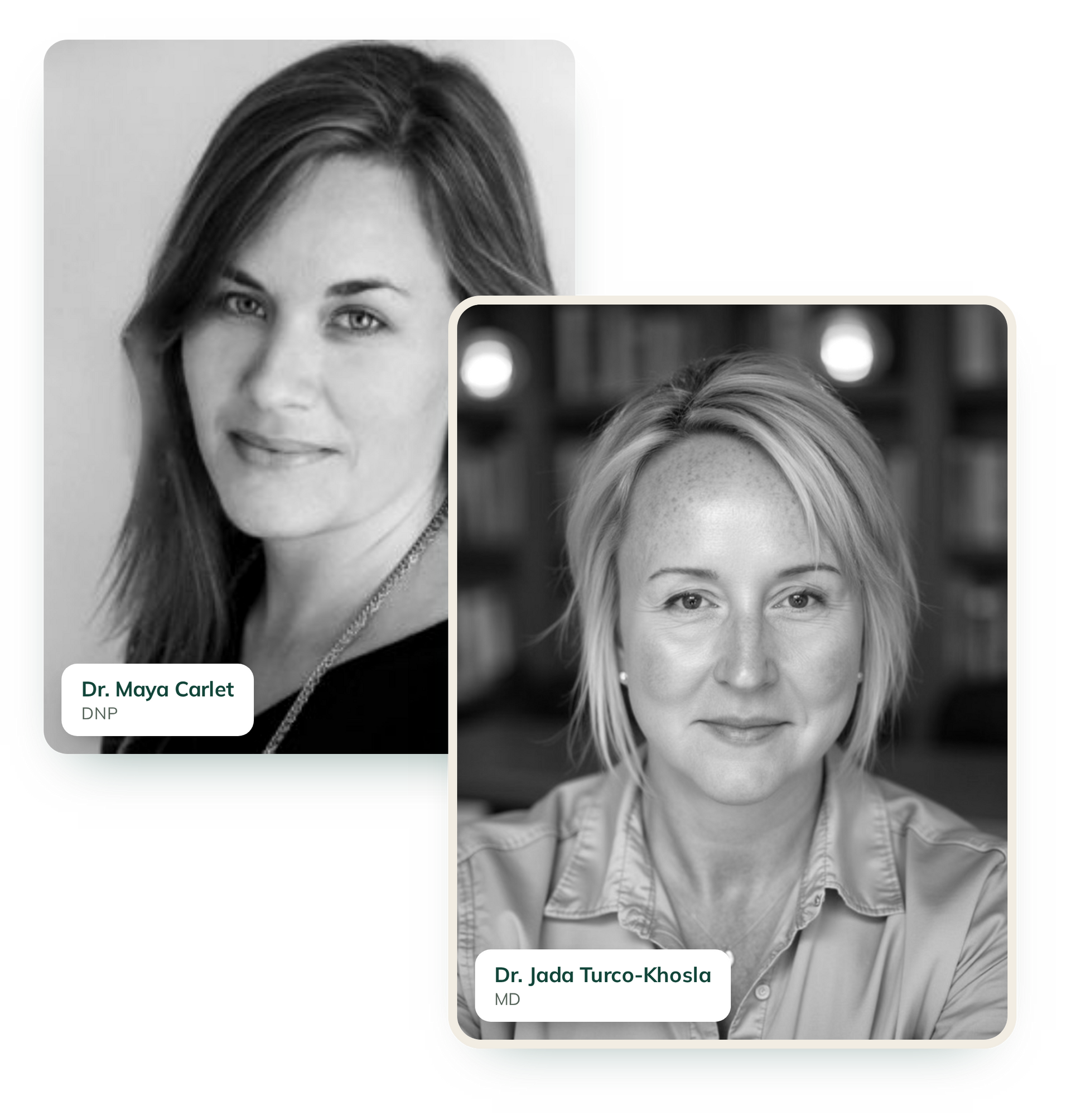
What truly distinguishes our practice is the combined, multidisciplinary expertise of Dr. Jada Turco-Khosla, MD, and Dr. Maya Carlet, DNP. Together, we blend integrative psychiatry, specialized medicine, metaphysics, and advanced precision neuro-interventions. Rather than a one-size-fits-all approach, your evaluation and treatment are tailored to support you as a whole being, with thorough, compassionate guidance at every step of your care.
She told me that my voice sounded “brighter”
At age 67, after requiring medicine for depression for about 35 years, I feel blessed to have discovered State Street TMS. I had taken just about every SSRI and SNRI available and ALWAYS at some point I felt like my brain would become reticent to the effect of the drug… I was done with this pharmaceutical merry-go-round and THANKFULLY transcranial magnetic therapy worked!
Every single day I am grateful to all the staff at State Street TMS. The atmosphere felt warm, inviting, and comfortable and the staff always did their best to accommodate any scheduling changes I needed. The best testimonial I received was from a lifetime friend whom I haven't physically seen for 6 years… she told me that my voice sounded “brighter” when we telephoned over the holidays!
Lallie M · Google review
A full course
What the whole process looks like
TMS works over a course of treatment, not a single visit.
The technology
The TMS technology in our clinic
MagVenture TMS
The device behind every protocol we deliver.
Atlas neuronavigation
For accelerated and custom protocols, targeting is customized to your unique brain structure and external landmarks.
Monitored throughout
The system tracks the coil position so every session targets the same spot.

Neuronavigation
Used for accelerated and custom protocols
Targeting built from your own brain structure, and checked every session.
Is it safe?
What TMS isn't
TMS is often pictured as more dramatic than it is. The easiest way to explain it is by what it's not.
Questions
What people ask before they call
Does TMS hurt?
Most people feel a tapping on the scalp that eases after the first few sessions. Some get a mild headache early on, which usually settles.
Is TMS the same as ECT?
No. ECT is done under general anesthesia and induces a seizure. TMS uses focused magnetic pulses while you're wide awake, with no anesthetic and no recovery period.
How long does a session take?
About 19 minutes with rTMS, or about 3 minutes with theta burst. Accelerated treatment uses several short sessions a day over six days.
How soon will I notice a difference?
With the standard course, people who respond often notice a shift in the first few weeks. With the accelerated course, it's often around day three. For most people, benefits keep building for up to 12 weeks after the last session.
Can I drive myself home afterward?
Yes. There's no sedation and no recovery time, so you can get straight on with your day.
Do I have to stop my medication?
Usually not. Most people stay on their current medication, and any change is between you and your prescriber.
Is TMS covered by insurance?
The standard course for depression is covered by most insurers, and the standard OCD course by some. Accelerated and customized protocols are cash-pay.
Is TMS safe for everyone?
We screen first, for seizure history and for metal implants near the head, before anything is scheduled.

WHY US
Why State Street TMS
Six reasons people choose us.


What happens next
Ready to talk it through?
Request an appointment, and we'll arrange your evaluation and check your insurance so you know where you stand before committing to anything.